
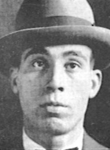
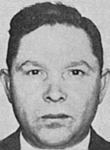
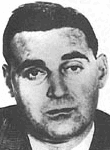
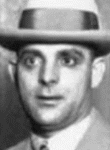
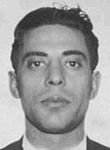
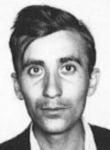
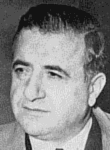
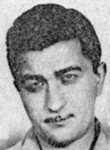
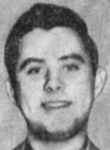
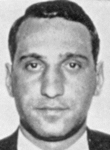
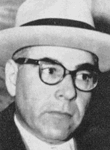

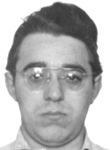
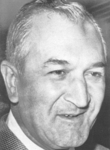
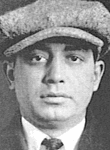
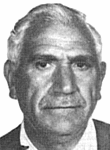
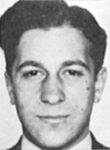
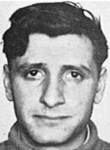

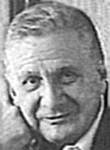
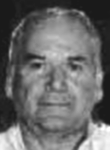
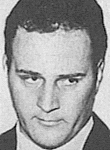

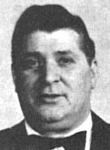
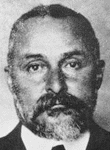
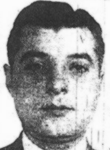
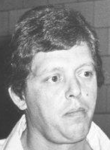
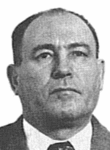
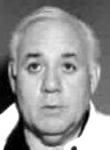

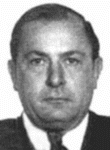
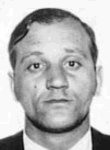
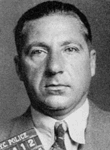
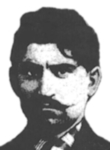
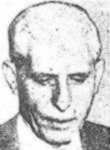
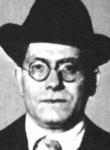
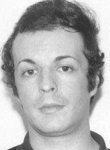
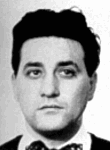
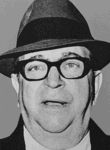
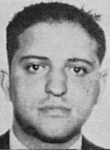
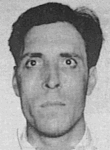
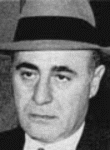
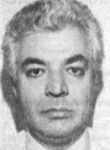
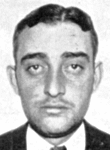
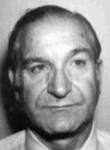
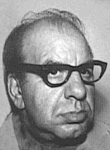
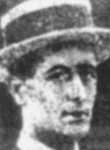
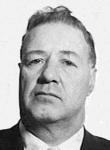
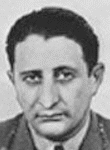
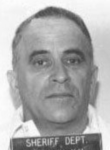
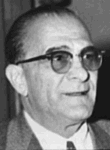
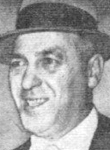

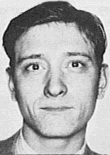
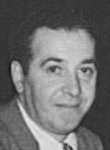
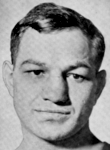
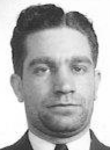
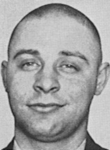
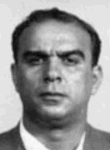
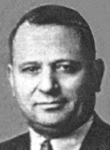
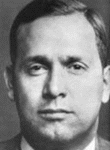
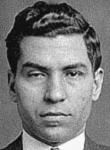
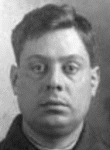
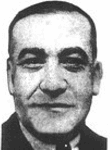
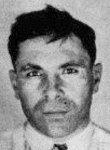
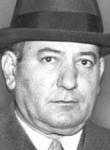
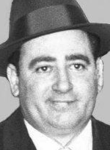
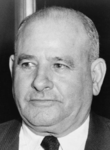
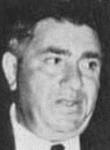
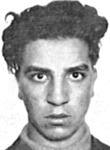
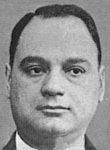

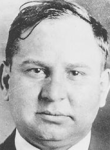

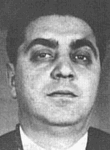
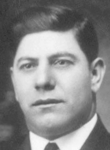
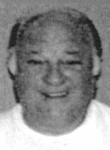
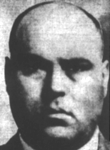
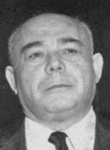
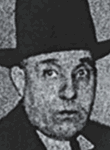
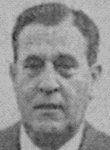
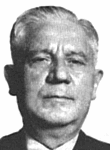
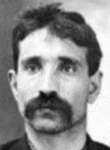
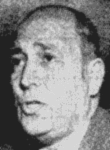
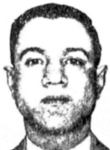
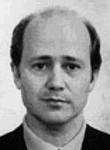
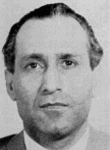

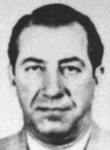
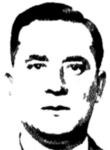
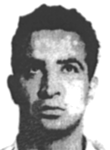
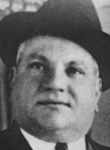
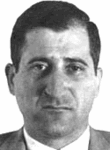
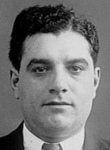
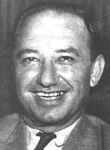
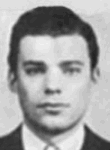
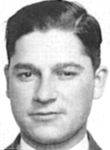
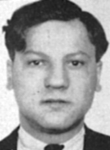
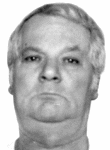

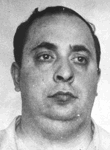
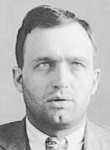
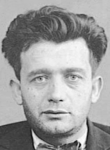
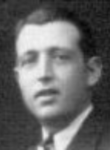
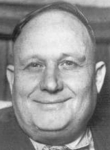
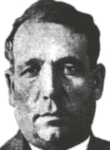
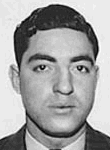
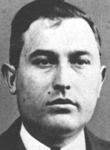
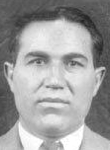
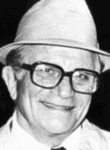
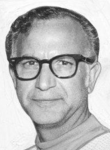

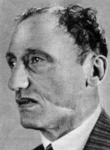
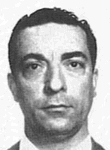
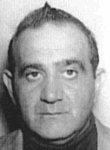

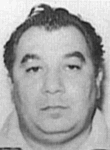
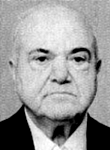
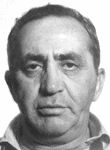
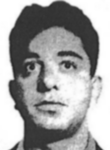
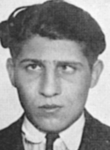
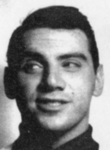

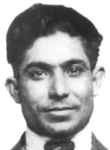
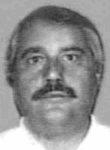
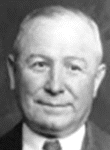
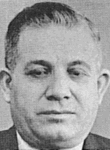
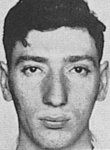
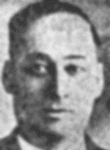

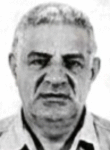
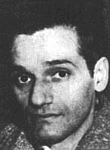
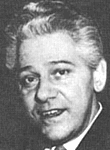
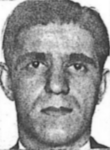
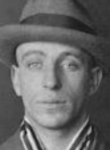
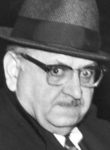
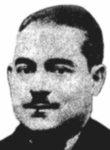

Born Jan. 26, 1935, in Buffalo, Leonard F. Falzone was a longtime leader of the mob-plagued Laborers International Union (LIUNA) Local 210. Convicted of racketeering in 1994, Falzone was sentenced to five years in federal prison. Efforts by authorities to prosecute him for more violent offenses were unsuccessful.
Falzone's association with the Laborers began in the early 1970s - about the same time as a misdemeanor conviction for possession of stolen property.
Eavesdropping federal agents heard Falzone's name mentioned in 1977, as mobster John C. Sacco conversed with his brother Richard, a veteran Buffalo police officer. John Sacco described a failed plan for the murder of Faust "Frosty" Novino. The underworld had decided that Novino was partly responsible for the 1974 killing of Albert Billiteri, Jr., and put a contract out on Novino. During the conversation, John Sacco mentioned that Leonard Falzone was one of the men who participated in the botched hit. While prosecutors never forgot the connection, they were unable to build a credible case against Falzone.
Early in March of 1980, police and federal authorities suspected Falzone of involvement in the daytime, workplace killing of FBI informant William "Billy the Kid" Sciolino. A car known to be frequently used by Falzone had been observed and ticketed for illegal parking at a location where the killers' getaway vehicle was subsequently found. At Falzone's home, detectives discovered a number of items - including a .25-caliber pistol - that had been reported stolen in burglaries in the early 1970s. Falzone was questioned about the Sciolino murder and processed on a charge of possession of stolen property. That charge was later dismissed, when a judge found problems with the search warrant used by detectives.
The Sciolino case quickly grew into federal and county grand jury probes of the underworld of western New York and the corruption of Laborers Local 210.
The investigations resulted in no indictments for the Sciolino murder or the apparently related killing of Carl J. Rizzo (Rizzo's decomposing remains were discovered in the trunk of an abandoned car on April 10, 1980.) In spring, 1983, however, seven officers of Laborers Local 210 were indicted on charges of conspiracy and embezzlement of union funds. The defendants were Leonard Falzone, brothers John A. Pieri and Joseph R. Pieri, Daniel Domino, Victor Randaccio, Daniel Sansanese Jr. and Joseph Todaro Jr. Federal agents stated that the defendants had misused as much as $150,000 of union funds on unauthorized vacations through a five-year period.
In the early 1990s, Faust Novino agreed to testify about the failed murder plot against him. He was called as a witness in a perjury trial of Vincent "Jimmy" Sicurella, believed to be one of five gunmen who fouled up the Novino hit. On the stand, Novino did not name defendant Sicurella as an attacker, but indicated that Leonard Falzone, John Sacco, Frankie Billiteri and someone who "looked like Joe Todaro Jr." made the attempt on his life. According to Novino, he drew a handgun and shot his way out of a trap. He recalled colliding with Falzone, putting his pistol to Falzone's chest and pulling the trigger. But, he said, the weapon jammed.
Federal prosecutors, armed with turncoat witnesses, tape recorded conversations and statements from problem gamblers who turned into unwilling loanshark customers, began the racketeering case against Leonard Falzone in May 1994. At the time, Falzone supervised the $82.8 million pension fund of Laborers Local 210. Prosecutors said he also happened to be a capodecina in the Buffalo Crime Family. On July 1, a jury found Falzone guilty of racketeering and racketeering conspiracy. Co-defendant Joseph Sacco was convicted of conspiracy but acquitted of a racketeering charge.
At the time of Falzone's conviction, a jubilant law enforcement official claimed that Falzone was the "No. 2 or, at the very least, the No. 3 man in organized crime in Buffalo."
 Falzone resigned from his officer position with Local 210. On Jan. 18, 1995, he was sentenced to five years and a month in federal prison. Sentencing Judge Richard Arcara stated: "The court does not question that you are a caring, loyal father and husband... But you are a complex man, almost like a Dr. Jekyll and Mr. Hyde."
As Falzone entered federal prison, U.S. Justice Department officials entered into a consent agreement with the Laborers International Union under which organized crime influence would be eliminated from the union. Local 210 resisted the cleanup effort. In 1996, control over Local 210 was assumed by the international union and Local 210 leaders were replaced. In June of that year, the international announced that 28 members of Local 210 were known mobsters or mob associates. It launched a disciplinary effort to exclude sixteen reputed Buffalo Crime Family members from any further involvement in the union. Leonard Falzone's name appeared prominently in that list.
Reporting on Falzone's death at the age of 81, the Buffalo News noted that the previous twenty years had been quiet ones for Falzone: "His thick Buffalo News file contains not a single story after 1996."
Falzone died at his Amherst, New York, home on Nov. 12, 2016.
Link:
Sources:
- Hunt, Thomas, and Michael A. Tona, DiCarlo: Buffalo's First Family of Crime, Volume II - From 1938, 2013. Buffalomob.com/
- SA Buffalo, "FBI Prosecutive Report of Investigation…," File no. BU 159A-147, Sept. 29, 1983.
- "Magaddino La Cosa Nostra family racketeering enterprise investigation," John R. Catanzaro FBI file, Sept. 30, 1996, p. 1, 4.
- "In Memory of Leonard F. Falzone," Obituary, Lombardo Funeral Home, Lombardofuneralhome.com
- "FBI bares alleged talks about Billiteri 'hit,' others," Buffalo Courier Express, June 28, 1977.
- "Police to quiz car's owner in Sciolino death," Buffalo Evening News, March 10, 1980.
- "Man sought in Sciolino case located," Buffalo Courier Express, March 11, 1980.
- Coppola, Lee, and Walter Fuszara, "Lawyer meets with probers in Sciolino slaying," 1Buffalo Evening News, March 11, 1980.
- "Charges against Falzone dismissed," Buffalo Courier Express, May 21, 1980.
- Hammersley, Margaret, "Misuse of funds charged," Buffalo News, April 29, 1983.
- Hammersley, Margaret, "Other U.S. probes seen linked to Local 210 arrests," Buffalo News, April 30, 1983.
- "Innocent plea made by Falzone in probe of union embezzling," Buffalo News, May 2, 1983.
- Herbeck, Dan, "Prosecutor makes case against Falzone bail," Buffalo News, Aug. 25, 1989, p. C1.
- Schulman, Susan, "Sacco gave information on unsolved crimes, official says," Buffalo News, Oct. 26, 1990.
- Herbeck, Dan, "Novino set to testify as federal witness," Buffalo News, Nov. 23, 1992.
- Buckham, Tom, "Novino describes escape from ambush in 1976 and identifies 4 of 5 suspects," Buffalo News, April 13, 1993.
- "Elfvin sentences Sicurella to minimum of 21 months for perjury," Buffalo News, June 12, 1993, p. B12.
- Herbeck, Dan, "Trial is latest in 25-year try to nab Falzone," Buffalo News, May 5, 1994.
- Herbeck, Dan, "Jury in loansharking trial hears tapes of Falzone demanding collection of debt," Buffalo News, May 20, 1994.
- Buckham, Tom, "Jury hears FBI tapes in loansharking trial," Buffalo News, May 24, 1994.
- Anzalone, Charles, "Spano says Vegas venture needed Falzone’s backing," Buffalo News, May 26, 1994.
- Herbeck, Dan, "Mob-linked figure guilty as racketeer," Buffalo News, July 2, 1994.
- Herbeck, Dan, "Falzone gets five-year term as loan shark," Buffalo News, Jan. 19, 1995.
- Herbeck, Dan, and Michael Beebe, "Local 210 told to purge mob ties," Buffalo News, Feb. 16, 1995.
- Herbeck, Dan, "Laborers Local 210 sues to block mob-cleanup plan," Buffalo News, March 15, 1995.
- Herbeck, Dan, "Union says mob runs Local 210," Buffalo News, Dec. 14, 1995.
- Herbeck, Dan, "Ouster set for leaders of Local 210," Buffalo News, Feb. 23, 1996.
- Herbeck, Dan, "Union links 28 members of Local 210 to mob," Buffalo News, June 19, 1996, p. B1.
- "Mob’s control of Local 210 has a long history," Buffalo News, Dec. 5, 1999.
- Herbeck, Dan, "Local 210 gets clean bill of health," Buffalo News, Jan. 26, 2006.
- "Leonard F. Falzone," Obituaries, Buffalo News, Nov. 14, 2016, Buffalonews.com.
- Warner, Gene, "Death of Leonard F. Falzone stirs memories of organized crime probe," Buffalo News, Nov. 15, 2016, Buffalonews.com.


