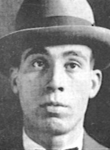
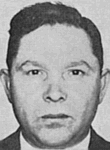
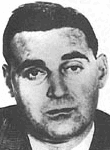
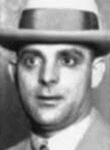
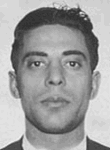
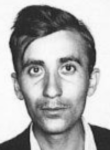
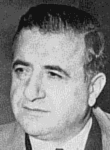
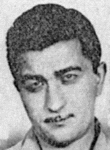
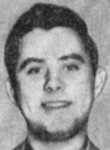
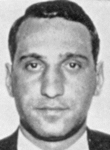
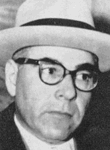
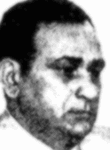
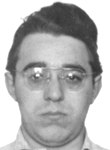
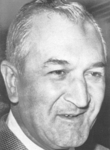
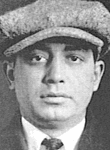
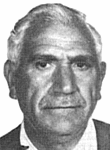
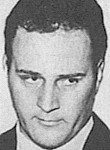
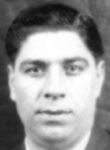
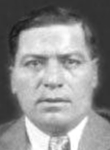
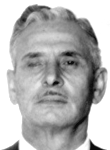
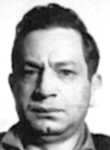
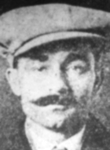
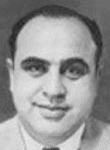
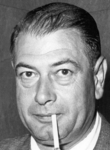
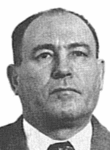
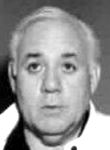
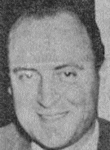
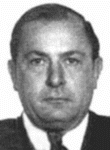
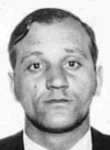
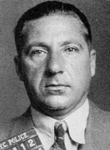
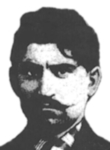
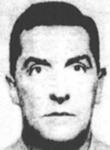
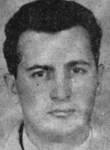
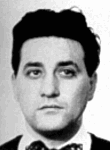
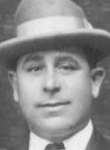
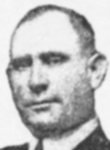
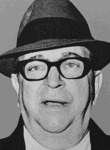
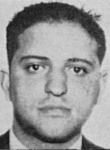
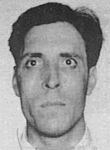
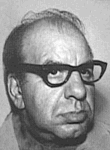
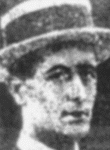
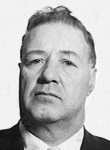
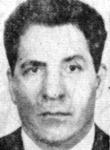
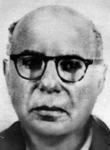
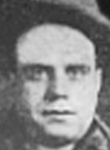
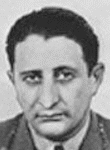
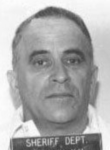
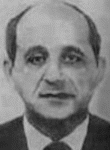
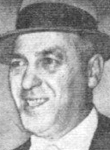

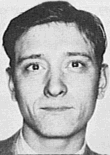
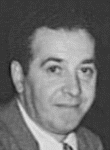
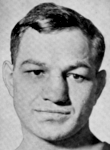
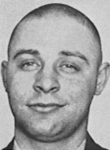
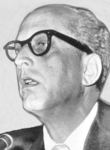
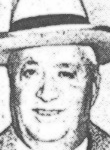
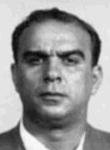
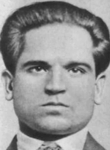
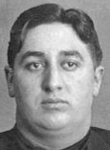
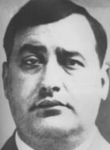
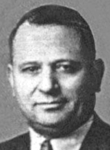
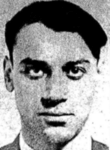
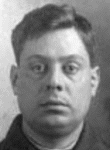
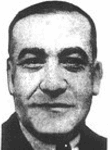
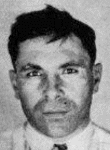
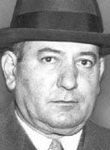
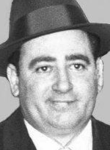
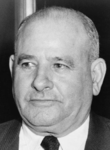
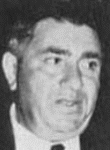
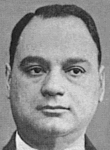
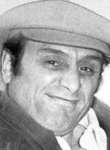
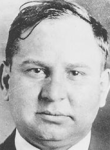

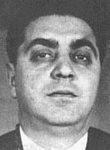
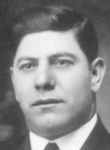
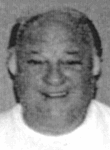
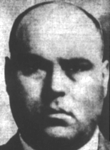
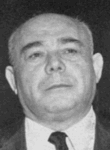
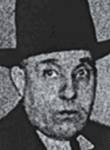
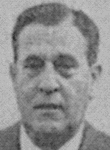
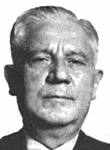
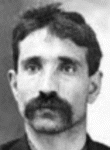
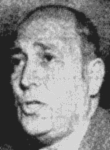
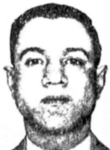
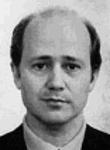
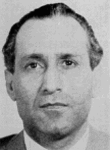
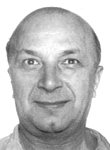
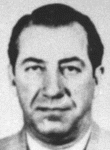
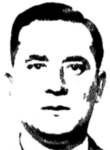
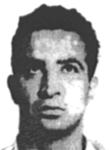
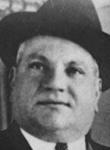
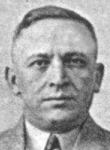
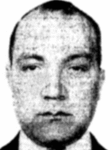
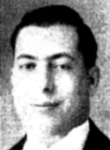
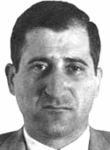
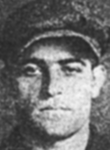
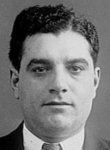
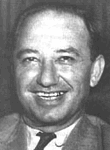
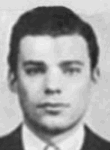
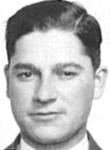
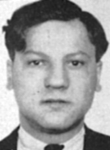
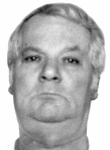
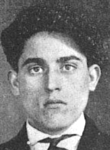
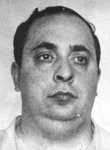
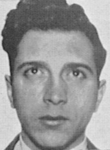
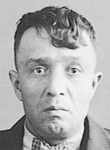
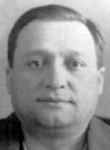
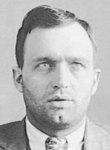
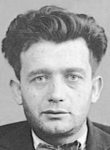
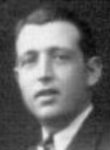
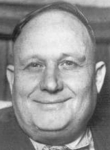
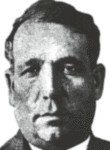
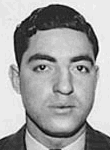
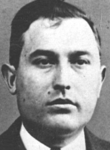
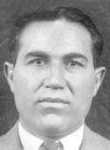
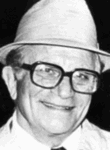
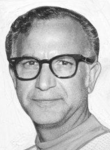
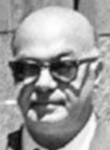
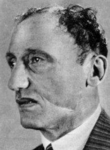
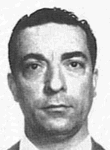
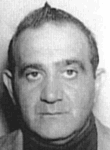
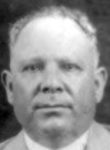
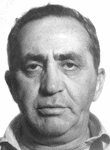
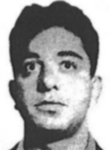
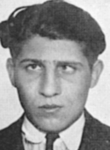
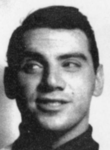
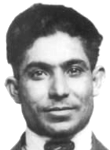
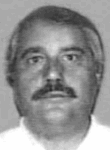
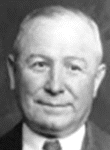
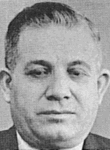
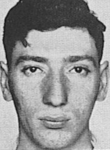
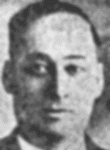
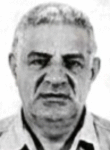
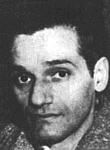
Cassandro Bonasera John Cammilleri Joseph Fino Sam Frangiamore Thomas Hunt Antonino Magaddino Stefano Magaddino Angelo Palmeri Michael A. Tona
Showing posts with label Pospichal. Show all posts

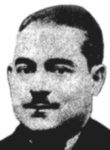
Rosario Carlisi (April 10, 1909, - April 29, 1980)


Rosario "Roy" Carlisi was born April 10, 1909, in Chicago. His parents, Giuseppe and Calogera Cassaro Carlisi, were originally from the Sicilian province of Agrigento. While in Chicago, Giuseppe was involved in bootlegging activities and was reported to be a member of Al Capone's underworld "Outfit."

In 1931, the Carlisi family moved from Chicago to western New York and opened a restaurant/tavern. Roy and Giuseppe Carlisi partnered in bootlegging enterprises with Calogero Romano and apparently did so with the approval of the Magaddino Mafia. Romano, owner of a tavern on Buffalo's lower west side, was a close associate of boss Stefano Magaddino. Roy Carlisi's marriage to Romano's daughter Filippa (Fanny) strengthened his relationship to his Mafia superiors.

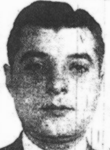
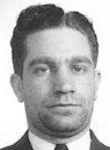
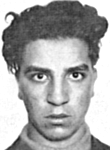
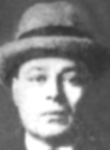
Roy Carlisi in 1932
In 1933, Roy and his father were questioned by Buffalo police during the investigation of the murders of Vincent and Salvatore Callea. The Calleas, supported by Mafia elements from outside western New York, had set themselves up as rivals to the Magaddino organization.

During the 1930s, Giuseppe Carlisi relocated back to Chicago. On a visit to that city in December 1937, Roy Carlisi was arrested for the first time. He and his father were charged with possession of untaxed liquor after a 300-gallon still was seized by Alcohol Revenue Agents. The charges were later dismissed in federal court.

Three years later, Roy Carlisi established the C&C Market, a wholesale seafood company in Buffalo. His underworld connections afforded him a monopoly on the wholesaling of clams in the Buffalo area, and he became known as "Roy the Clam Man." His monopoly would linger through several decades.

Carlisi, Frederico Randaccio and Willie "the Whale" Castellani were questioned at length by police after the 1945 murder of anti-gambling crusader Edward Pospichal.

Carlisi opened Club 97 in 1948. The bar/restaurant became a popular night spot for members of the Buffalo underworld. During the 1950s, Carlisi reportedly became a close associate of Stefano Magaddino and his Buffalo underbosses John Montana and Frederico Randaccio.

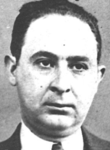
Buffalo Courier Express, Jan. 18, 1958
Carlisi was part of the western New York delegation rounded up by New York State Troopers and U.S. Treasury Department agents outside of Joseph Barbara's Apalachin, New York, home on Nov. 14, 1957. He was among the scores of Mafiosi taken into custody and questioned as they left Barbara's residence and encountered a police roadblock.

As the FBI joined the fight against organized crime following the events at Apalachin, the Bureau's Buffalo Field Office labeled Carlisi a "top hoodlum" in its territory and kept him under intense scrutiny.

During a grand jury investigation into the Apalachin convention, Carlisi refused to answer questions 77 times, despite a grant of immunity from prosecution and a court demand that he testify. As a result of his defiance, he was charged on March 7, 1958, with 15 counts of criminal contempt. He was found guilty and sentenced to a 60-day term in prison.

Carlisi's underworld involvement came to the attention of the New York State Liquor Authority, which revoked his liquor license forcing the closure of Club 97. The authority determined that Carlisi's failure to disclose his 1937 arrest on his liquor license application was a violation of its regulations.

A chart presented in 1963 to Senator John McClellan's committee investigating organized crime identified Carlisi as a lieutenant in the Magaddino Mafia.

Carlisi was among the three dozen men, including Joseph DiCarlo, Frederico Randaccio, Pasquale Natarelli and Joseph Fino, arrested during a May 8, 1967, police raid at Panaro's Lounge. Charges of consorting with known criminals were later dropped in Buffalo City Court.

Despite his ties to Magaddino, Carlisi became a strong supporter of a rebel Buffalo underworld faction in 1969. He was offered the leadership of the breakaway Buffalo Crime Family but refused it, fearing the additional law enforcement scrutiny that would result. The organization selected Sam Pieri as acting boss, Joseph Fino as acting underboss and Joseph DiCarlo as acting consigliere.

A Rochester, New York, Mafia organization commanded by Frank Valenti also sought its independence from Magaddino and won the support of the Buffalo Crime Family. Leaders from Buffalo and Rochester met at a Batavia restaurant on June 2, 1970, apparently to discuss the matter. Police officers raided the meeting and arrested Carlisi and Fino, as well as Rochester leaders Valenti and Rene Piccaretto. The four men were charged with loitering and suspicion of intent to commit a crime.

During the 1970s, Carlisi played an important advisory role in the Buffalo Crime Family and helped to oversee mob control of Laborers' Local 210 in Buffalo. He largely avoided the attention of law enforcement by focusing on his business roles as owner of C&C Market and co-owner of the Turf Club restaurant on Buffalo's lower west side.

Carlisi, 71, died April 29, 1980, following a heart attack.

Frederico Randaccio (July 1, 1907. - Oct. 4, 2004)

Frederico "Lupo" Randaccio was born in Palermo, July 1, 1907. His father Umberto (born Oct. 16, 1880) crossed the Atlantic early in 1910, arriving in the U.S. on Feb. 9, 1910. Frederico, his sister Eloisa and his mother Maria D'Amico Randaccio followed five months later, using the assumed surname of Fassi.

Frederico attended Buffalo public schools until the seventh grade. Following his thirteenth birthday in July 1920, he was arrested as a juvenile delinquent. A second juvenile delinquency arrest followed two years later.

As a member of Buffalo's DiCarlo Gang, Randaccio became acquainted with Pasquale "Pat Titters" Natarelli, John Cammilleri and the Pieri brothers. He also became well acquainted with the local authorities. He was arrested for gambling in 1925 and for bootlegging early in 1926.

One of the DiCarlo Gang's money-making rackets was extorting payments from bookmakers and operators of crap games. Randaccio became adept at extracting payments from gambling enterprises.

In 1928, he was fined $10 after being convicted of third-degree assault. A year later, he and his father were arrested on an open charge and questioned by police in connection with the murder of Joseph Syracuse.

Randaccio was sentenced to ten years in Elmira Reformatory following a September 1930 conviction for first-degree robbery. Released early, he was returned to prison for parole violation and remained there until June 11, 1941.

During the 1940s, Randaccio was closely associated with horserace wire rooms operated by Joseph DiCarlo and John Tronolone. Randaccio was questioned at length following the murder of anti-gambling crusader Edward Pospichal.

An honorable discharge after six months' service in the U.S. Army in 1945 allowed Randaccio to obtain his U.S. citizenship.

After DiCarlo's move to Youngstown, Ohio, Randaccio became the chief enforcer for Buffalo crime family leaders Vito "Buck Jones" Domiano, Angelo Acquisto and James "Julie" Caputo. Caputo's 1951 death allowed Randaccio to step into the role of Domiano's bodyguard and collector. The deaths of Acquisto in 1956 and Domiano in 1958 drew Randaccio up into the leadership of the western New York crime family commanded by Niagara Falls-based Stefano Magaddino. In 1958, Randaccio was Magaddino's chief lieutenant in Buffalo and overseer of all Mafia gambling operations in the city. At that time, Pasquale Natarelli became Randaccio's right-hand man. Randaccio's accession followed the Mafia's exposure at the Apalachin convention and coincided with an intensification of FBI efforts against racketeers. Randaccio was targeted by the Top Hoodlum Program initiated by FBI Director J. Edgar Hoover.

Randaccio's brother Victor and John Cammilleri helped to establish underworld control over Buffalo Local 210 of the International Laborers' Union.

Randaccio successfully quelled local opposition to Magaddino during the late 1950s and early 1960s. Independent-minded burglars Frank and Fred Aquino were murdered in September 1958, and Vincent Santangelo and Anthony Palestine met their violent ends in August 1961. Later that year, after Magaddino Crime Family narcotics trafficking became known to authorities, accused drug smuggler Alberto Agueci attempted to force Magaddino to provide financial support to himself and his brother, also charged with drug trafficking. Agueci's charred corpse was found in cornfield outside of Rochester on Nov. 23, 1961. FBI surveillance overheard Randaccio describing the disposal of Agueci's body.

Randaccio was arrested in the May 8, 1967, police raid on Panaro's Lounge. He and 35 others, including Joseph DiCarlo and Pasquale Natarelli, were charged with consorting with known criminals. At the time of the arrests, Randaccio flew into a rage and cursed law enforcement officers. The charges were later dismissed, but Randaccio's behavior and the failure of his political connections to warn him of the raid drew the ire of his boss Magaddino.

Randaccio, Natarelli, Stephen Cino, Charles Caci and Louis Sorgi subsequently faced federal conspiracy charges in connection with planned robberies in West Virginia and California. Testimony by mob informant Pascal Calabrese helped to convict all five defendants in November 1967. Randaccio and Natarelli were sentenced to 20-year terms in federal prison.

In the absence of the Magaddino Crime Family's top two Buffalo administrators, an anti-Magaddino faction took hold in the city's underworld.

Randaccio was paroled from prison at the age of 71. He had served 11 years of his conspiracy sentence. While law enforcement expected him to attempt to seize control of the Mafia in Buffalo, Randaccio instead settled into a quiet semi-retirement.

He died of natural causes, Oct. 4, 2004, at the age of 97.


Grave of Frederico Randaccio